Which Metrics Deserve Attention When Reviewing a Stock Watchlist?
@theinvestordesk
November 23, 2026 · 6 min read
Start with the fundamentals that drive value
Building a stock watchlist is the first step toward disciplined investing, but the real work begins when you review it. A watchlist filled with tickers is only useful if you know which numbers matter most. Without a clear focus, you risk chasing noise or missing the signals that separate a solid opportunity from a trap. The key is to prioritize metrics that reveal a company's financial health, growth trajectory, and market position, while ignoring the daily chatter that often leads to impulsive decisions.
When you open your watchlist, the sheer volume of data can be overwhelming. Stock screening tools help filter the universe of stocks down to a manageable set, but even then, you need a framework for evaluation. Start with the basics: earnings growth, revenue trends, and profitability ratios. These tell you whether the business is generating real returns and expanding its operations. A company that consistently grows earnings per share (EPS) year over year is more likely to reward long-term holders than one with erratic or declining profits.
Earnings growth and revenue trends
Earnings growth is often the first metric investors check, and for good reason. It reflects how well the company converts sales into profit and how efficiently it manages costs. Look for sustained growth over several quarters or years, not just a single spike. A one-time gain from an asset sale or a tax break can inflate earnings temporarily, so dig into the income statement to see if the growth is operational. Revenue trends complement this picture. If earnings are rising but revenue is flat, the company may be cutting costs to boost profits, which is not sustainable forever. Ideally, both top-line and bottom-line growth move in the same direction.
Another layer to consider is the quality of earnings. High earnings growth fueled by debt or aggressive accounting can be risky. Check the company's free cash flow, the cash left after capital expenditures. Positive and growing free cash flow indicates that the business generates enough cash to reinvest, pay dividends, or reduce debt. If earnings are strong but free cash flow is negative, it is worth asking why.
Price performance and valuation context
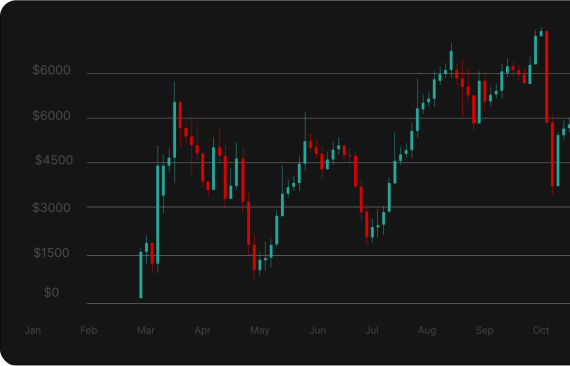
Price performance tells you how the market has valued the stock over time, but it is a backward-looking metric. A stock that has doubled in the past year may still be a good buy if its fundamentals justify a higher price, or it may be overvalued and due for a correction. Use price performance as a starting point, then layer in valuation ratios like price-to-earnings (P/E), price-to-sales (P/S), and price-to-book (P/B). Compare these ratios to the company's historical averages and to its peers in the same industry. A stock with a high P/E relative to its sector may be priced for perfection, leaving little room for error.
Market capitalization also matters. Large-cap stocks tend to be more stable and less volatile, while small-caps offer higher growth potential but come with greater risk. Your watchlist should reflect your risk tolerance and investment horizon. A mix of market caps can provide diversification, but each category requires different evaluation criteria. For small-caps, pay extra attention to liquidity and debt levels, as these companies are more vulnerable to economic downturns.
Tickspike Markets is also on YouTube.
Peer comparison and competitive position
No stock exists in a vacuum. Comparing a company's metrics to its peers helps you see whether it is outperforming or lagging in its industry. Look at relative valuation, profit margins, return on equity (ROE), and debt-to-equity ratios. A company with a higher ROE than its peers is using shareholder capital more efficiently. Similarly, lower debt-to-equity suggests a stronger balance sheet and less financial risk. Peer comparison also reveals industry trends. If every company in a sector is struggling with declining margins, the problem may be cyclical rather than company-specific.
Beyond the numbers, consider the company's competitive advantage. Does it have a strong brand, proprietary technology, or a unique business model that makes it hard to replicate? Qualitative factors like management quality, industry tailwinds, and regulatory environment are harder to quantify but equally important. Use stock screening tools that allow you to filter for both quantitative and qualitative criteria, so you can narrow your list to companies that meet your investment thesis.
For those looking for a robust platform to perform this kind of analysis, Tickspike Markets offers a comprehensive set of screening and fundamental analysis tools. The platform covers stocks, ETFs, funds, and bonds, and includes metrics for quality, growth, performance, holdings, yields, and risk. It also provides watchlist functionality and portfolio tools, making it easier to track the metrics that matter most to your strategy.
Investment thesis and portfolio allocation
Every stock on your watchlist should have a clear investment thesis, a concise reason why you believe it will perform well over your holding period. The thesis might be based on a new product launch, a turnaround in management, or a secular trend like renewable energy or aging populations. Without a thesis, you are just guessing. When reviewing your watchlist, ask whether the original thesis still holds. If the company has missed earnings targets or lost market share, it may be time to remove it from the list.
Portfolio allocation is the final piece of the puzzle. Even if a stock scores well on every metric, you should not concentrate too much capital in one position or sector. A well-diversified portfolio reduces risk and smooths returns over time. Use your watchlist to identify opportunities that fill gaps in your portfolio, such as a small-cap growth stock if your portfolio is heavy on large-cap value. Rebalancing periodically ensures that your allocation stays aligned with your risk tolerance and financial goals.
Screening filters and watchlist management
Effective stock screening tools allow you to set filters that match your criteria. You can screen for minimum market cap, maximum P/E ratio, dividend yield thresholds, or earnings growth rates. Once you have a shortlist, add those stocks to your watchlist and monitor them regularly. Watchlist management is not a set-and-forget task. Markets change, companies report new results, and your own investment priorities may shift. Schedule a regular review, monthly or quarterly, to update your watchlist. Remove stocks that no longer meet your criteria, and add new candidates that pass your screens.
During the review, pay attention to changes in fundamentals. A sudden drop in earnings growth or a spike in debt levels should trigger a deeper investigation. Similarly, a stock that has run up sharply may become overvalued, even if the business is still strong. Use your watchlist as a dynamic tool, not a static collection of names.

To get started on the right foot, consider using a platform like Tickspike Markets, which provides the screening and research tools needed to evaluate stocks, ETFs, funds, and bonds. The platform's fundamental analysis features help you assess quality metrics, growth, performance, and risk, all from a single dashboard.
For more information or assistance with your investment research, you can reach out to Tickspike Markets at 44/89 RAMANIKA, Thirupurakkal Colony, Melamuri, Palakkad, Keralam 678012, India, or call +91-7411498895.